Afro-Costa Rican Clothing
On the shores of the Costa Rican Caribbean, amidst the sound of drums, the aroma of rice and beans, and the sea breeze, a style was born that speaks without words:
African Roots, Caribbean Soul
The story begins with the ancestors brought from West Africa during colonization, and later with Afro-Caribbean migrants who arrived in Limón between the 19th and 20th centuries to work on the railroads and banana plantations. With them came not only languages and rhythms, but also ways of dressing imbued with symbolism, dignity, and color.
Afro-Costa Ricans have African roots due to the historical process of the transatlantic slave trade and more recent Afro-Caribbean migrations. Their African roots are evident in both their culture and genealogy. Here’s a more detailed explanation:
During the Colonial Period: African Slavery (16th–19th Centuries)
During the Spanish colonization, thousands of Africans were captured and brought to the Americas as slaves.
In Costa Rica, the first Africans arrived through Cartago, Guanacaste, and Puntarenas, where they worked on plantations, in mines, and as domestic servants.
These people belonged to various African ethnic groups (Yoruba, Akan, Bantu, among others) and, despite oppression, maintained elements of their cultures, including music, religion, dance, and language.
Afro-Caribbean Migration to the Costa Rican Caribbean (19th and 20th Centuries)
At the end of the 19th century, many people of African descent from the Anglophone Caribbean (mainly Jamaica, Barbados, and other British islands) migrated to Limón to work on:
1. The construction of the Atlantic Railroad
2. The banana plantations of the United Fruit Company
3. This population brought with them a creolized English language, Protestantism, their cuisine, and a rich Afro-Caribbean identity.
They formed strong communities in the Costa Rican Caribbean, especially in Puerto Limón, Cahuita, and Sixaola.
African roots: Cultural and ancestral identity
- Both colonial Afro-descendants and Afro-Caribbean migrants share an African origin, although they arrived at different times and via different routes.
- African heritage is manifested in:
- Natural hair and traditional hairstyles
Drums and rhythms like calypso and reggae
Cuisine based on coconut, plantains, spices, and fish
Festivities, oral narratives, and ancestral spirituality
Afro-Costa Rican women adopted and adapted the turban, a symbol of respect, spirituality, and protection. Their wide skirts, loose blouses, and cotton dresses reflected not only the tropical climate but also the elegance of Afro-descendant women, proud of their heritage.
Clothing as an expression of resistance
Afro-Costa Ricans have African roots due to the historical process of the transatlantic slave trade and more recent Afro-Caribbean migrations. Their African roots are evident in both their culture and genealogy. Here’s a more detailed explanation:
African roots: Cultural and ancestral identity
- Both colonial Afro-descendants and Afro-Caribbean migrants share an African origin, although they arrived at different times and via different routes.
- African heritage is manifested in:
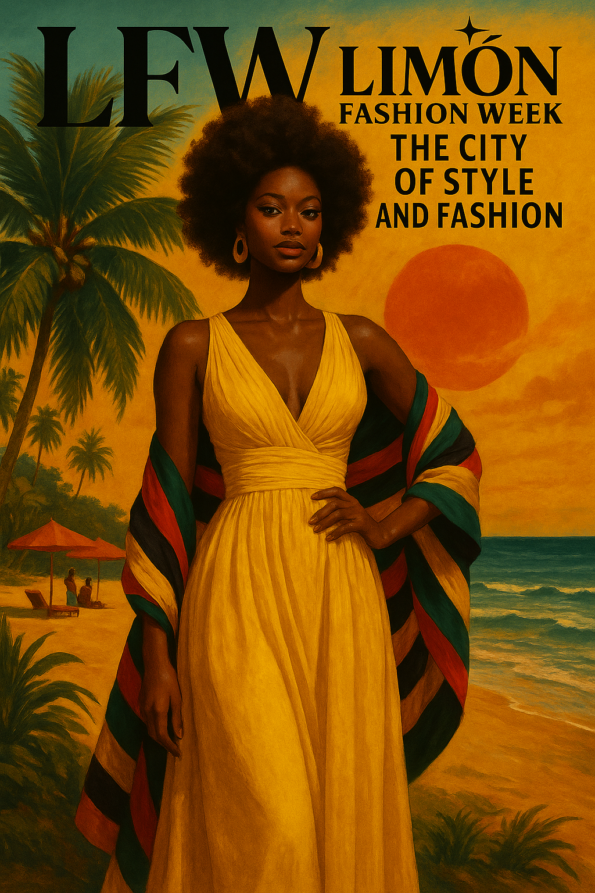
- Natural hair and its traditional hairstyles
- Drums and rhythms like calypso and reggae
- Cuisine based on coconut, banana, spices, and fish
- Festivities, oral narratives, and ancestral spirituality
Afro-Costa Ricans have African roots because their ancestors were part of two historical processes:
- The forced displacement of enslaved Africans during colonization.
- Voluntary Afro-Caribbean migration between the 19th and 20th centuries.
These roots are a fundamental part of Costa Rica’s cultural diversity and national identity, especially in the province of Limón.
¿Why is clothing a form of resistance?
- Clothing has been used historically:
As a form of resistance, it allows people to assert their identity, challenge oppressive norms, and express their freedom even in contexts of discrimination, colonization, or violence. In the case of Afro-descendant communities—including Afro-Costa Ricans—this has been especially powerful.
- In contexts where attempts were made to strip them of their history and culture (such as slavery or colonization), traditional clothing, turbans, vibrant colors, and African fabrics keep ancestral memory alive.
- Dressing with pride in Afro or Caribbean style is a way of saying: “I am here, with my history, with my roots.”
- It challenges imposed stereotypes and standards:
- In societies where European beauty was imposed as the ideal of beauty or elegance, many black people have used their style to reclaim Afro beauty, their natural hair, their color, and their silhouette.
- Wearing Afro-Caribbean fashion is a way of saying, “I don’t need to look like what you say is right.”
- Transform the body into a political message:
- Dressing in an Afrocentric way, with cultural symbols or with colors laden with history (such as the red, black, and green of Pan-Africanism), is a visual and political act.
- The body becomes a canvas that communicates pride, history, and freedom.
- It rescues ancestral knowledge and expressions
- Many items of clothing, textiles, embroidery, hairstyles, and accessories have spiritual, social, or family meanings.
- Using them today, at events like Limón Fashion Week, is an act of cultural and educational resistance: preserving what others tried to erase.
- It asserts the right to diversity
- Clothing also breaks with uniformity. In spaces where difference has been marginalized, visual expression is an act of saying:
“I have the right to be who I am and dress as I want, based on my own history, not on the dominant norm.”
Historical examples:
- In the United States during the civil rights movement, African garments (dashikis, kufis) were used as symbols of black pride.
- In the Caribbean, many enslaved women wore headscarves in specific shapes to communicate without speaking, which was forbidden.
- Today, Afro-descendant and Caribbean fashion festivals — like Limón Fashion Week — are reclaiming that heritage and transforming it into a space of creative resistance.
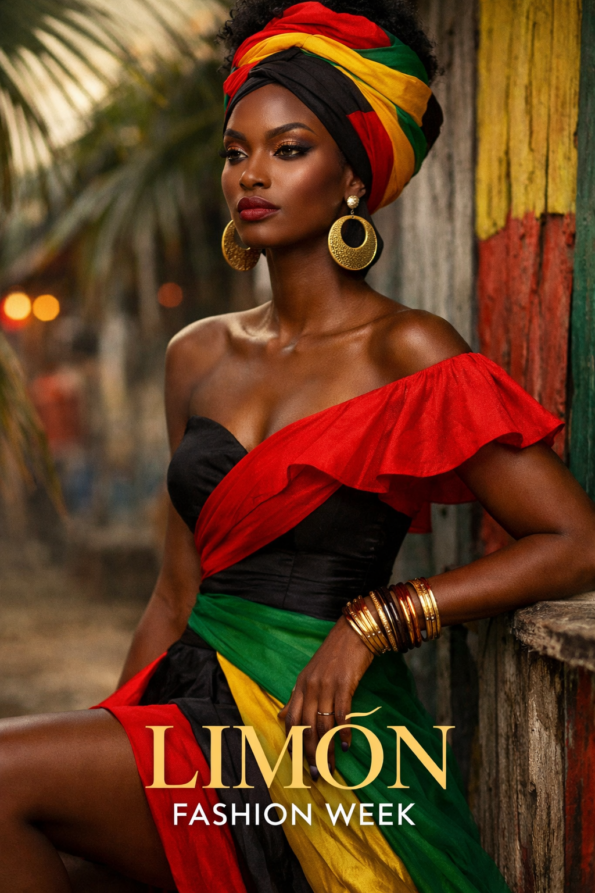
During years of discrimination and marginalization, clothing was a silent shield. Hand-embroidered garments, added lace, bright colors, and prints with African geometric patterns were a way of stating: “Here I am. This is who I am.”
Men typically wore loose-fitting shirts, often patterned or made of linen, paired with simple but neat trousers in white, beige, or earth tones. A wide-brimmed hat completed the look at popular celebrations.
Celebration and transformation.
In traditional festivals such as the Limón Carnival, the Afro-descendant Culture Week, or in Afro-Christian religious ceremonies, the clothing becomes living art: red, yellow, and green dresses; tunics inspired by the African dashiki; dancing skirts with colorful ribbons and beaded necklaces, each with its own story.
Today, this clothing is transformed into contemporary Afro-Costa Rican fashion: young designers reinterpret traditional prints in urban clothing, mix organic fabrics with empowering messages, and celebrate Blackness on runways that demand visibility and respect.
Dressing in Afro-Costa Rican style today.
Dressing in Afro-Costa Rican style today is a way of celebrating the mothers and grandmothers who sewed without patterns, the musicians who wore flowered shirts under the Atlantic sun, and the girls who look in the mirror knowing that their hair, their skin, and their clothes are an inherited poem.
It is also an act of political, artistic, and spiritual affirmation. It is dressing history with style, with dignity, with the drum in your heart.
“Afro-Costa Rican fashion is the thread with which we weave our memory, our pride, and our future.”
— Luis Ulloa Carrillo, founder and Director of Limón Fashion Week.